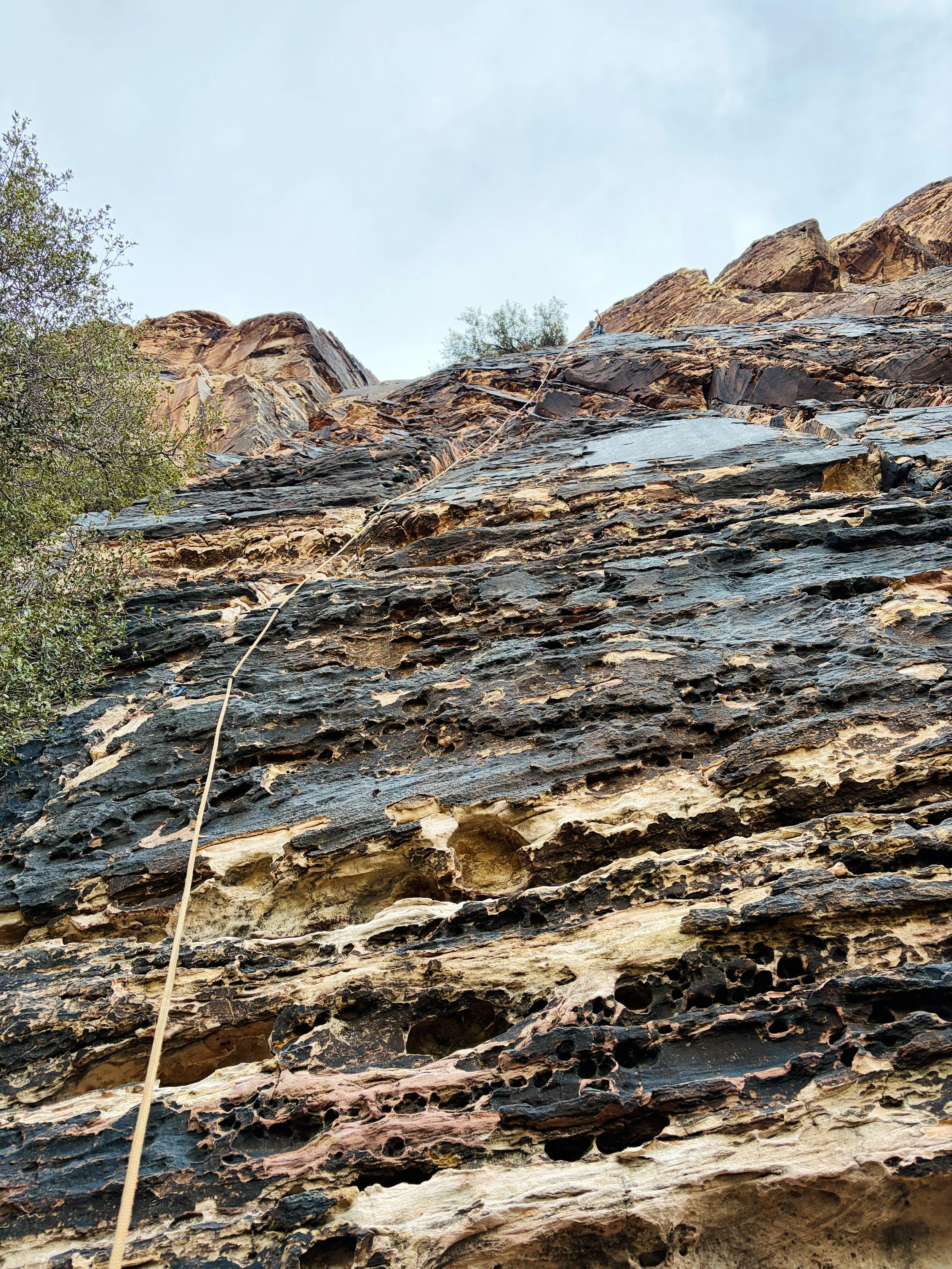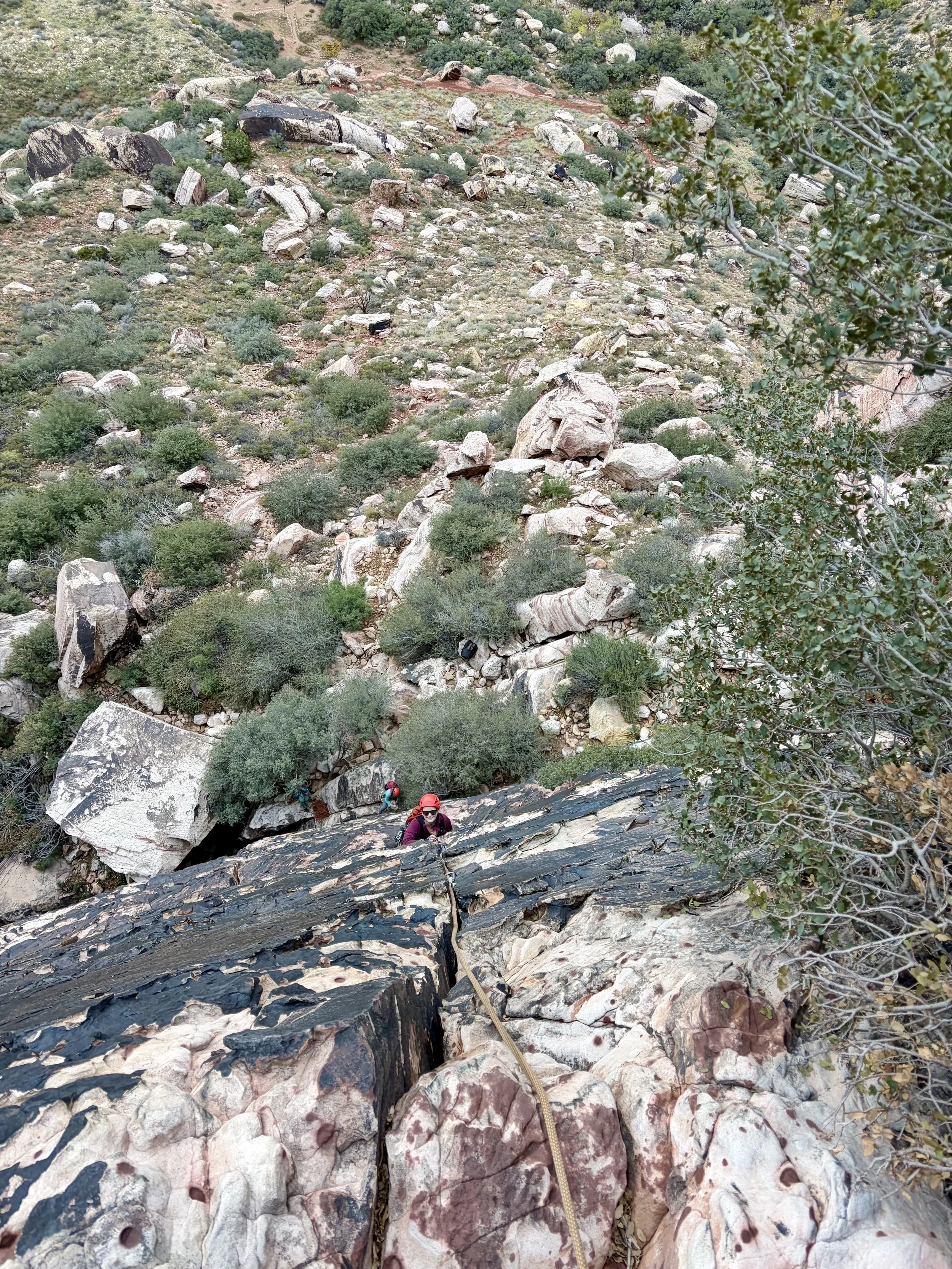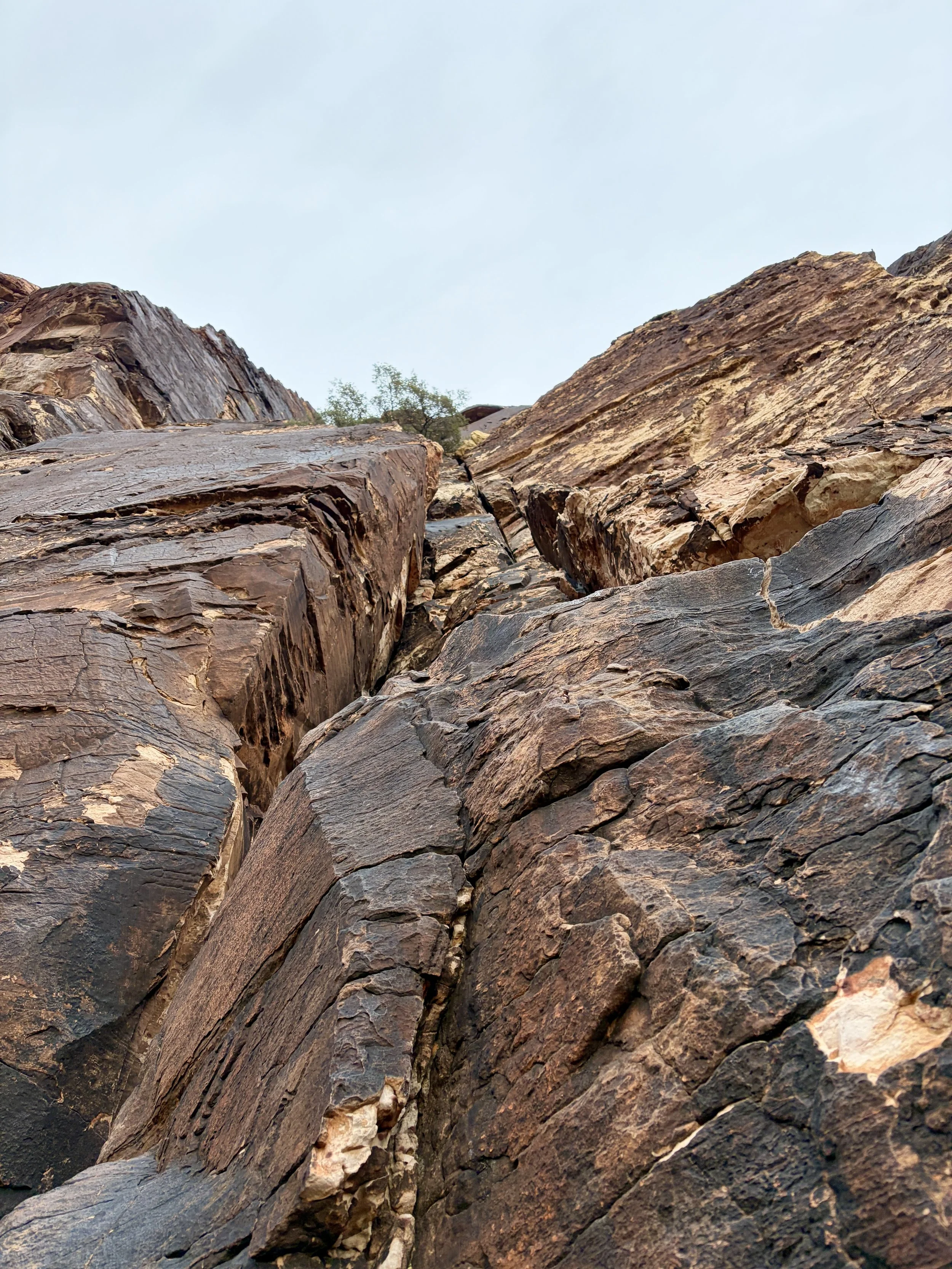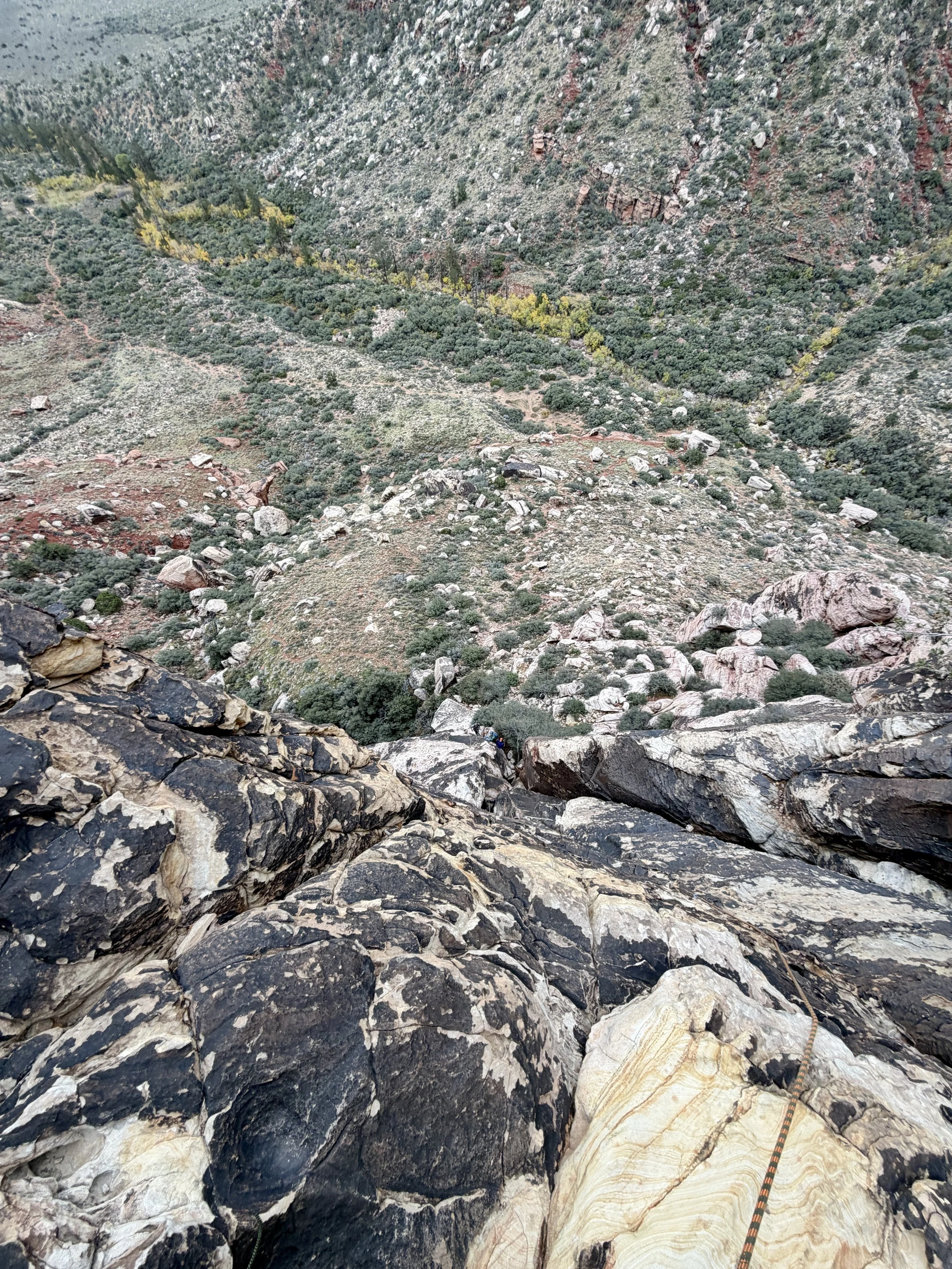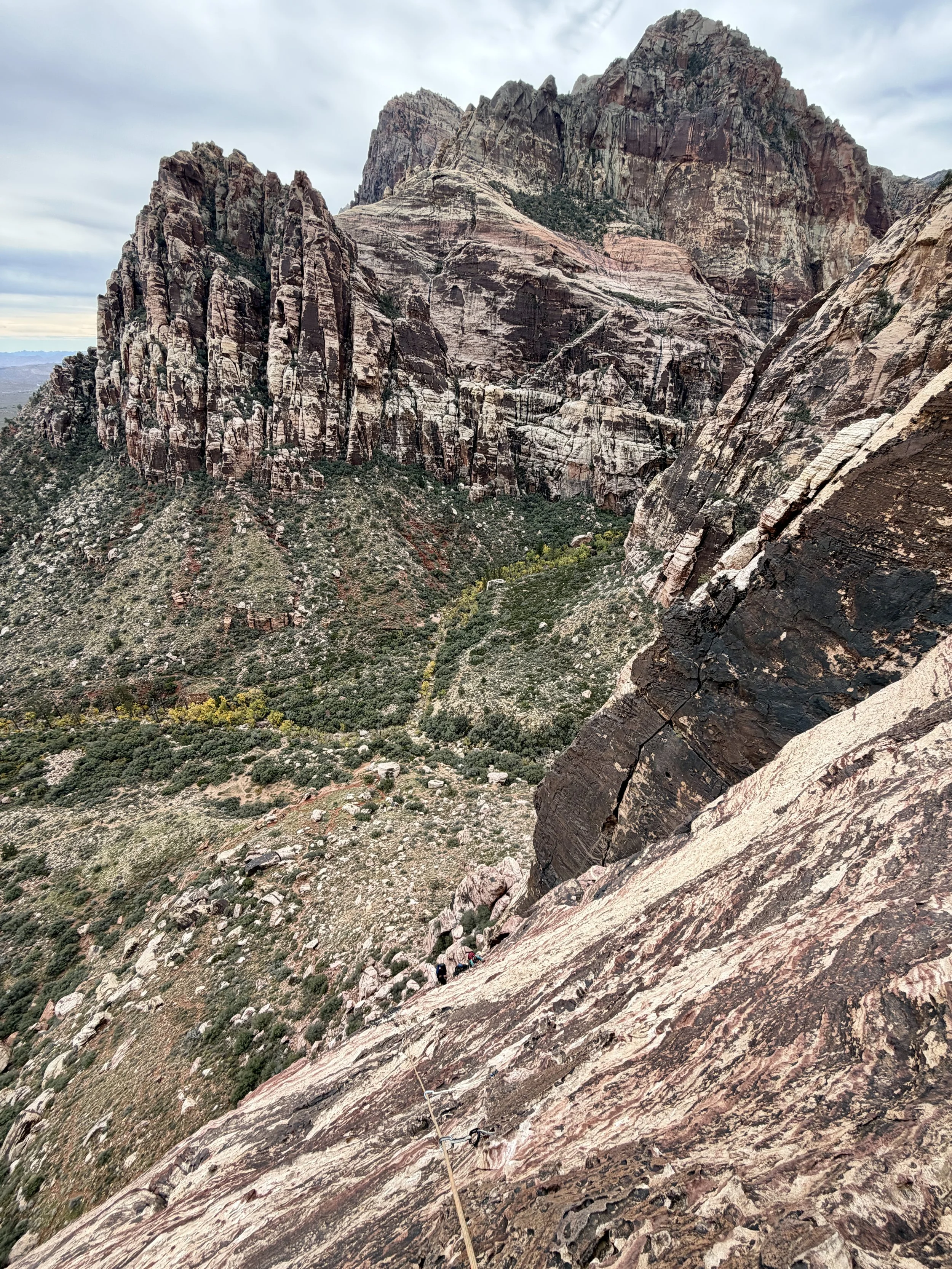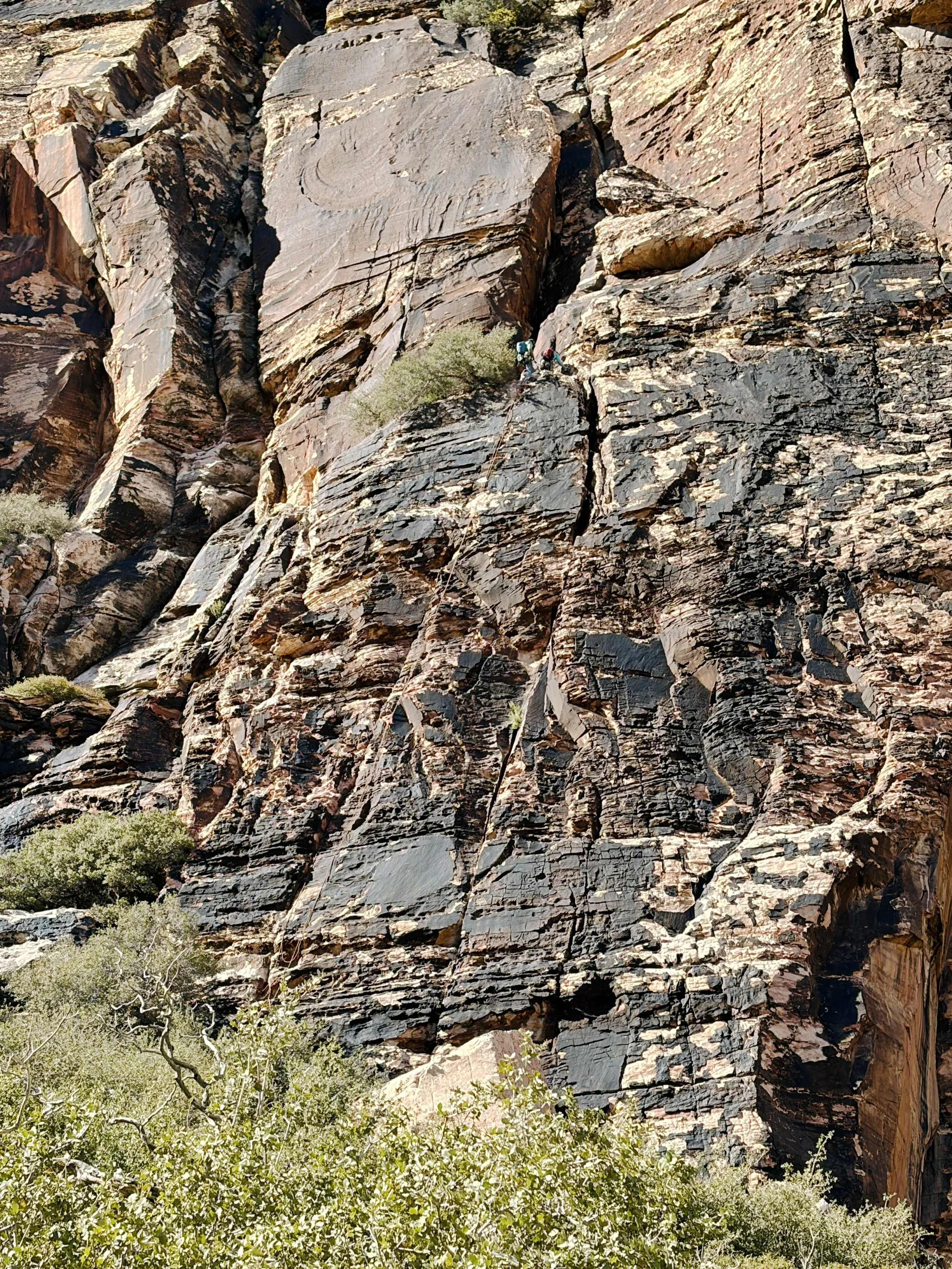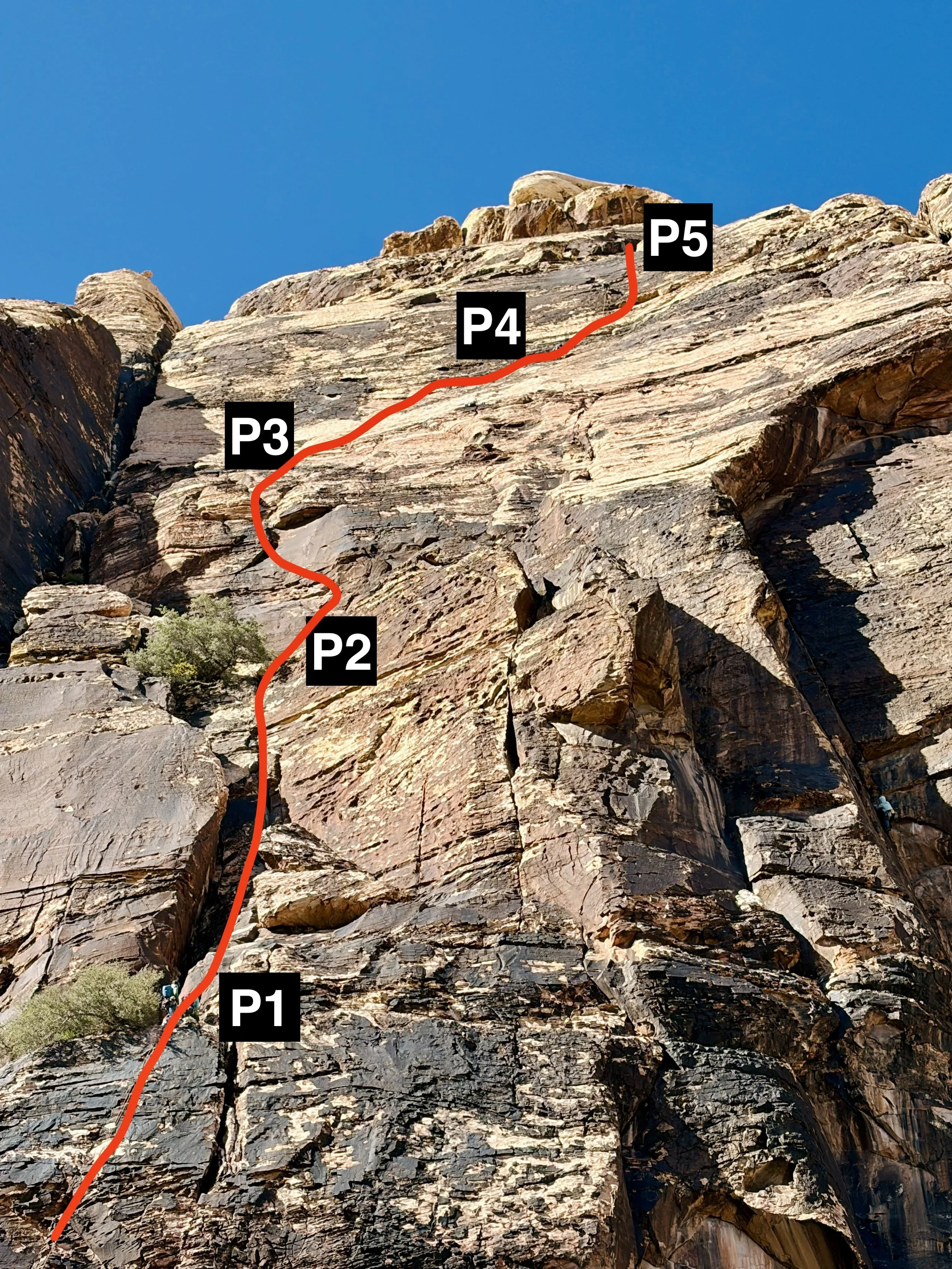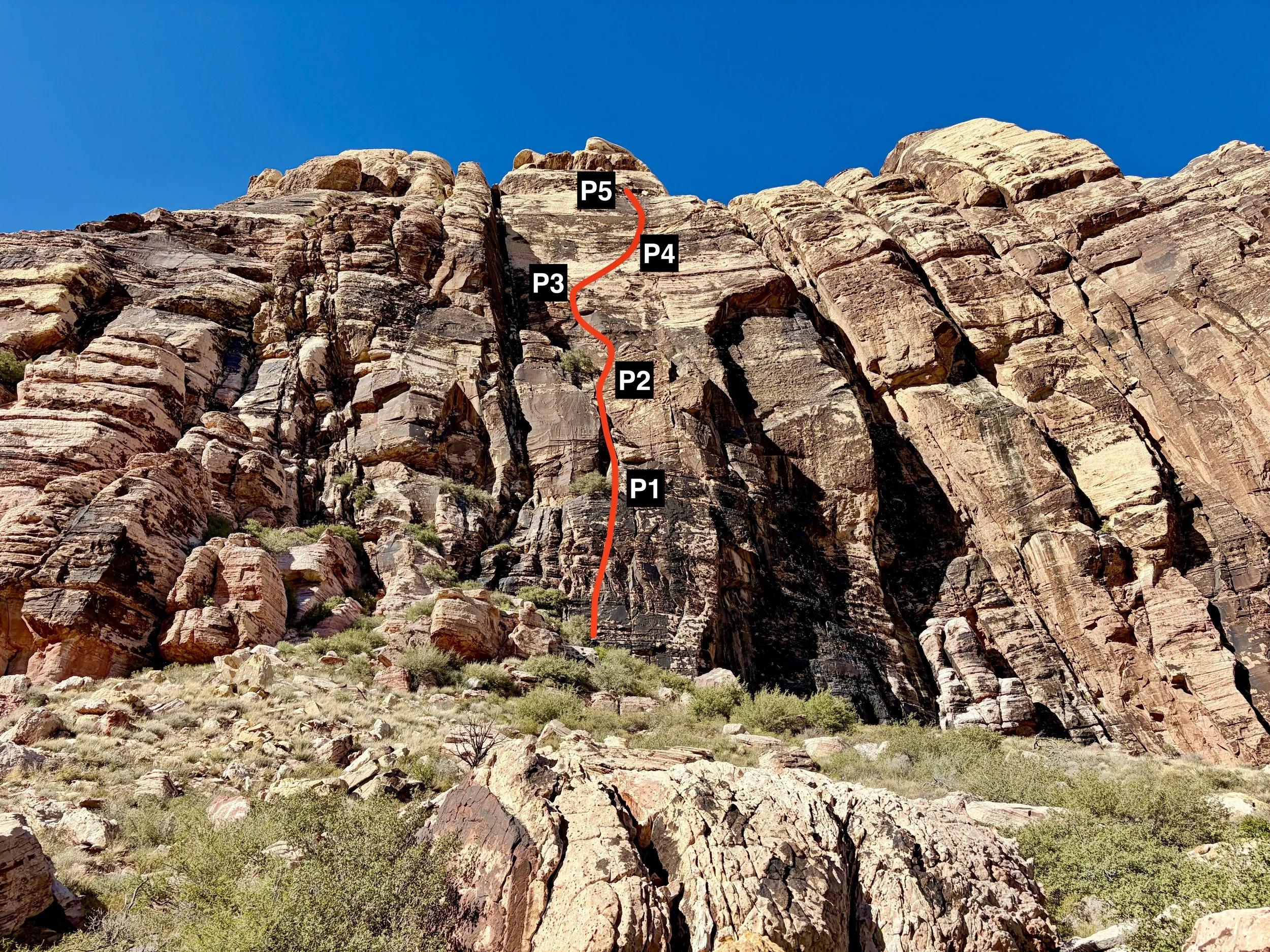
Birdland is one of the highest-rated, and therefore popular, routes at Red Rocks for a reason. It’s a 5 pitch trad route rated at 5.7+ on Mountain Project.
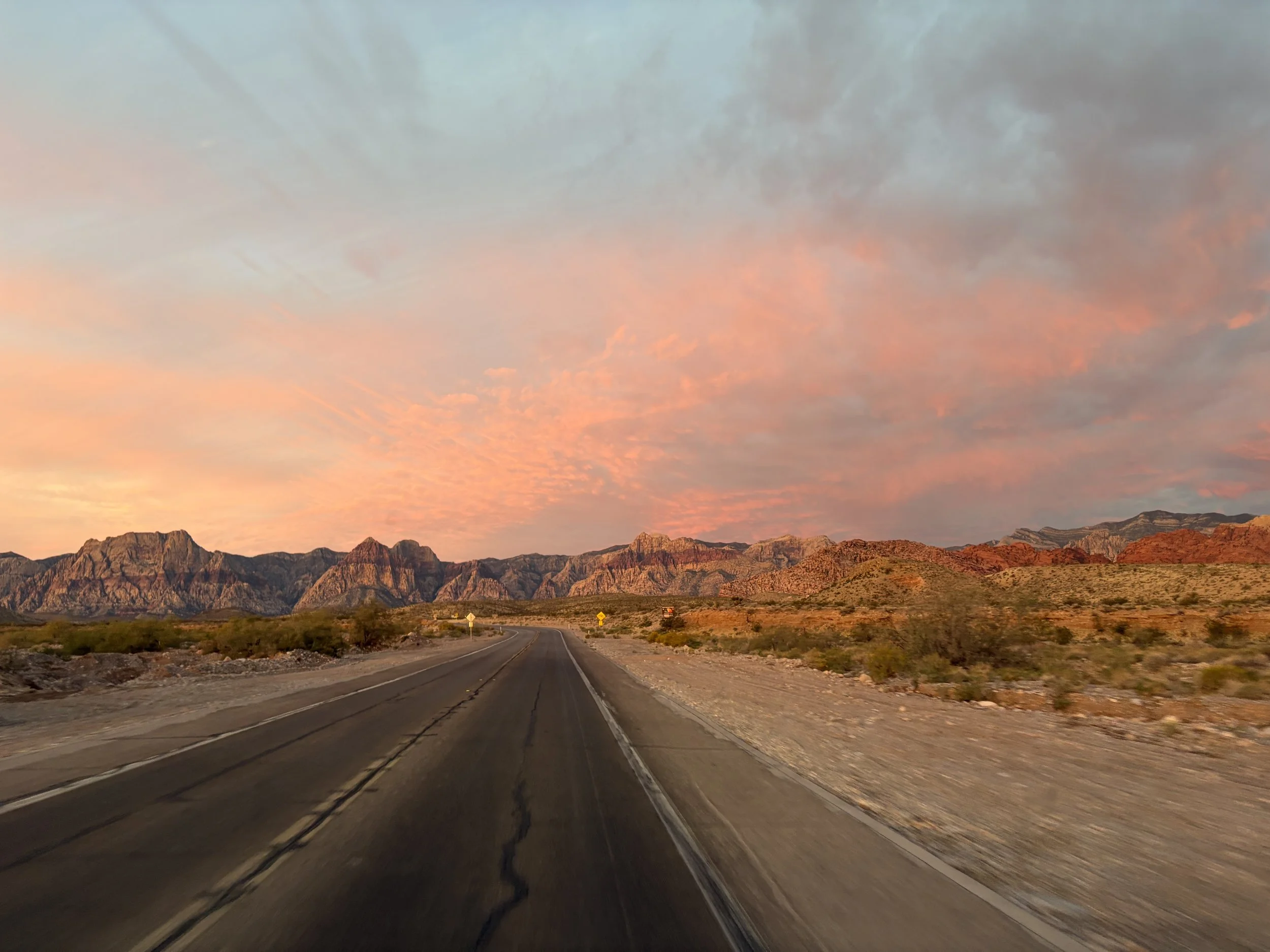
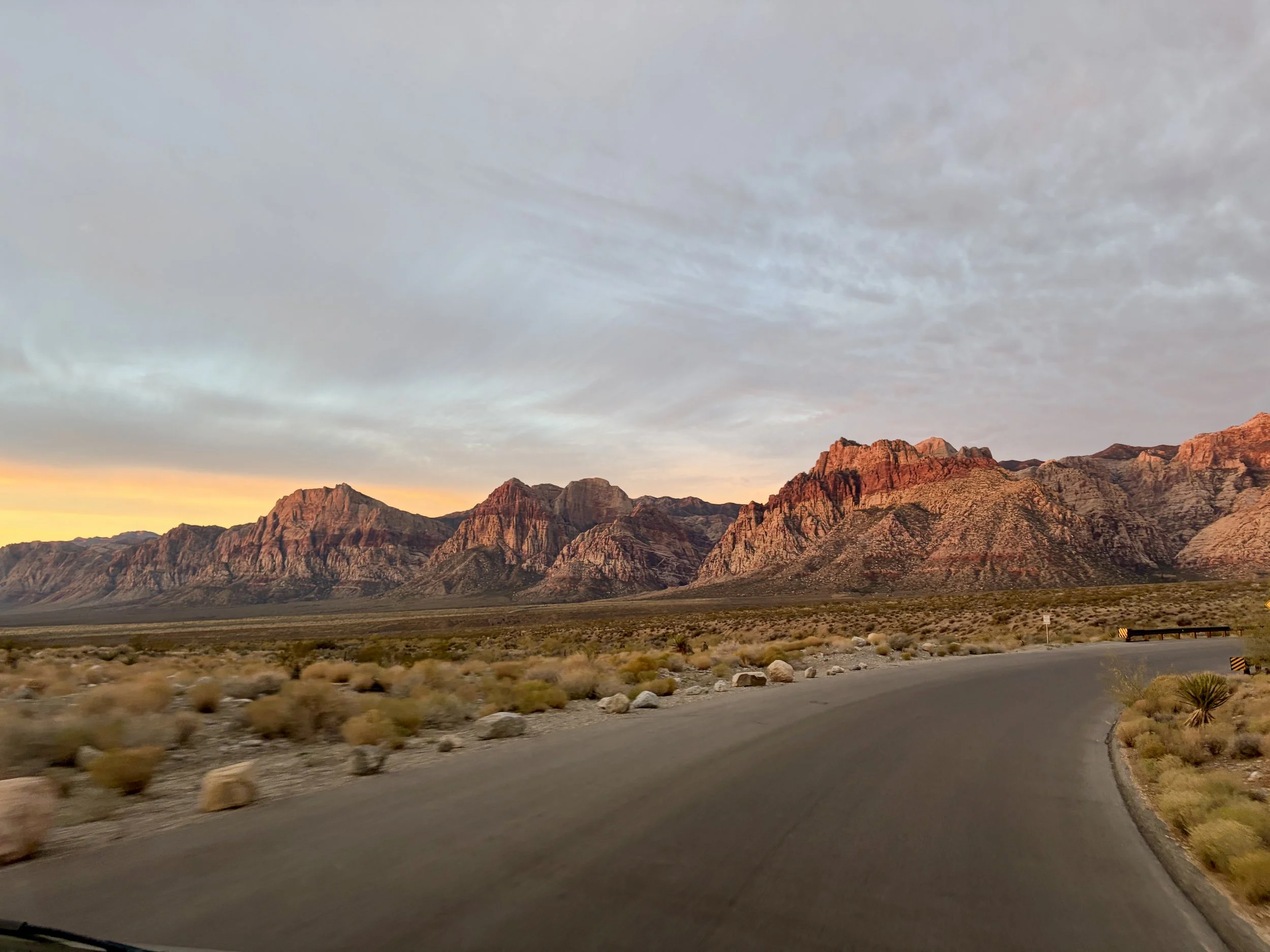
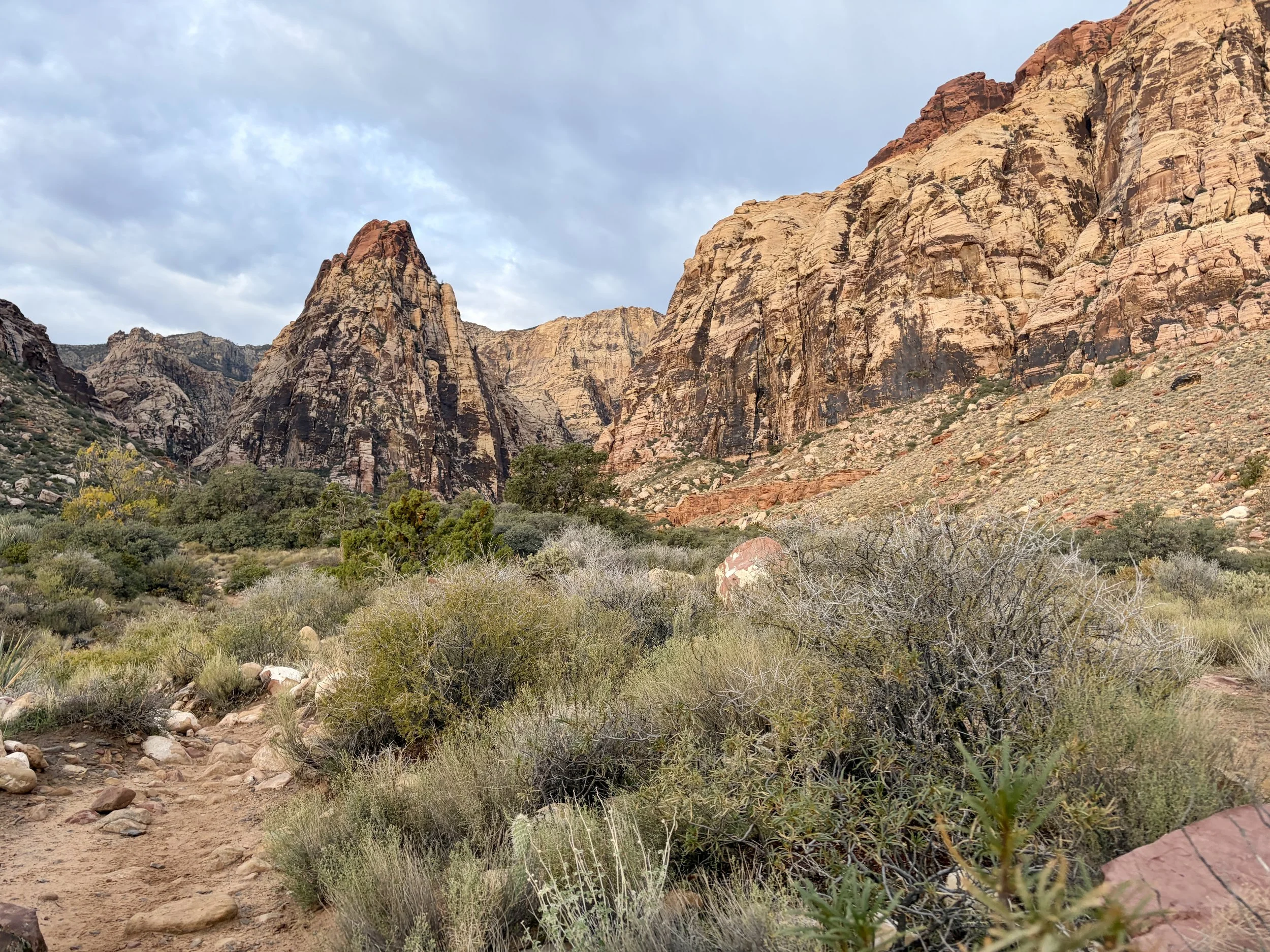
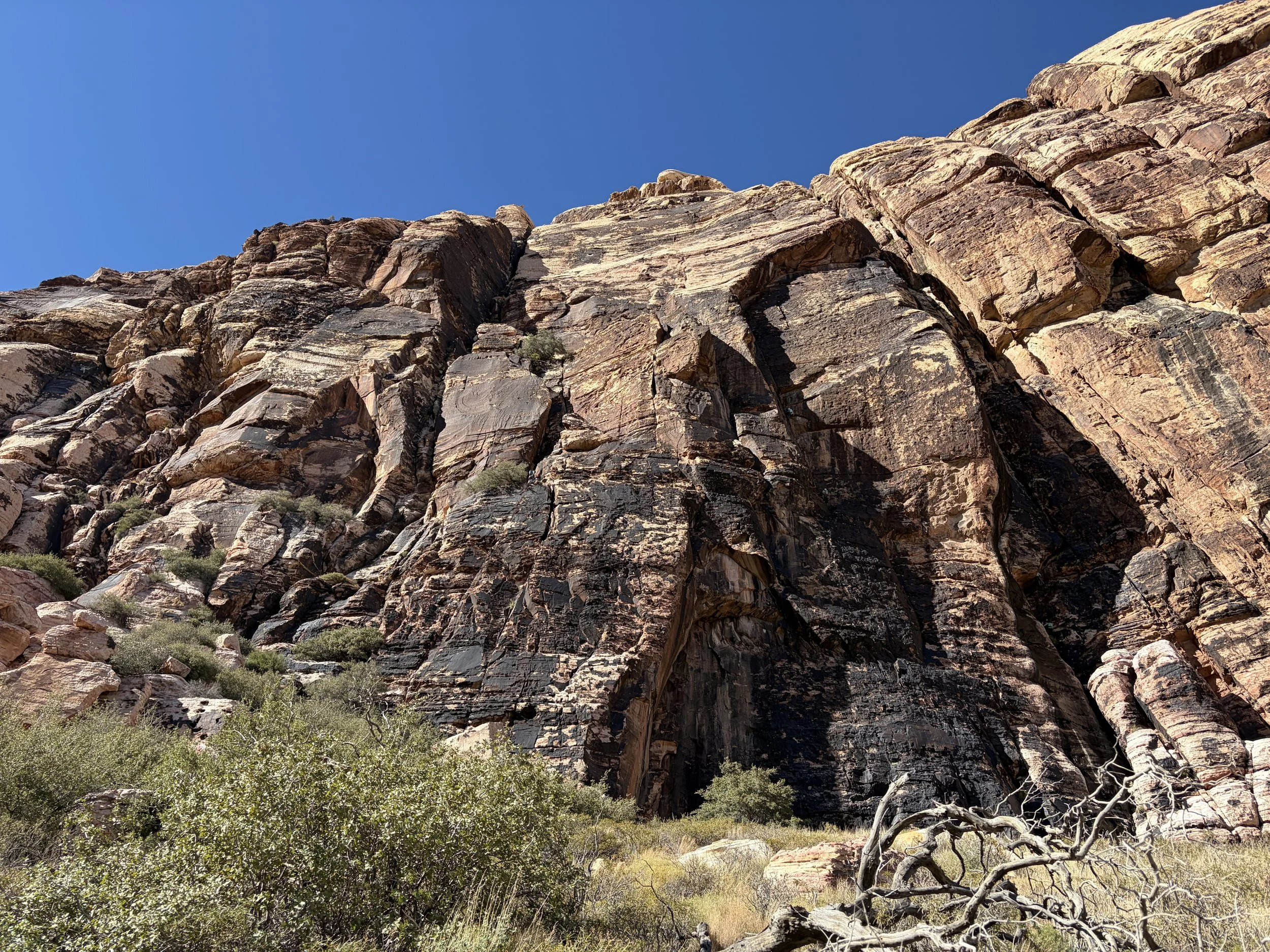
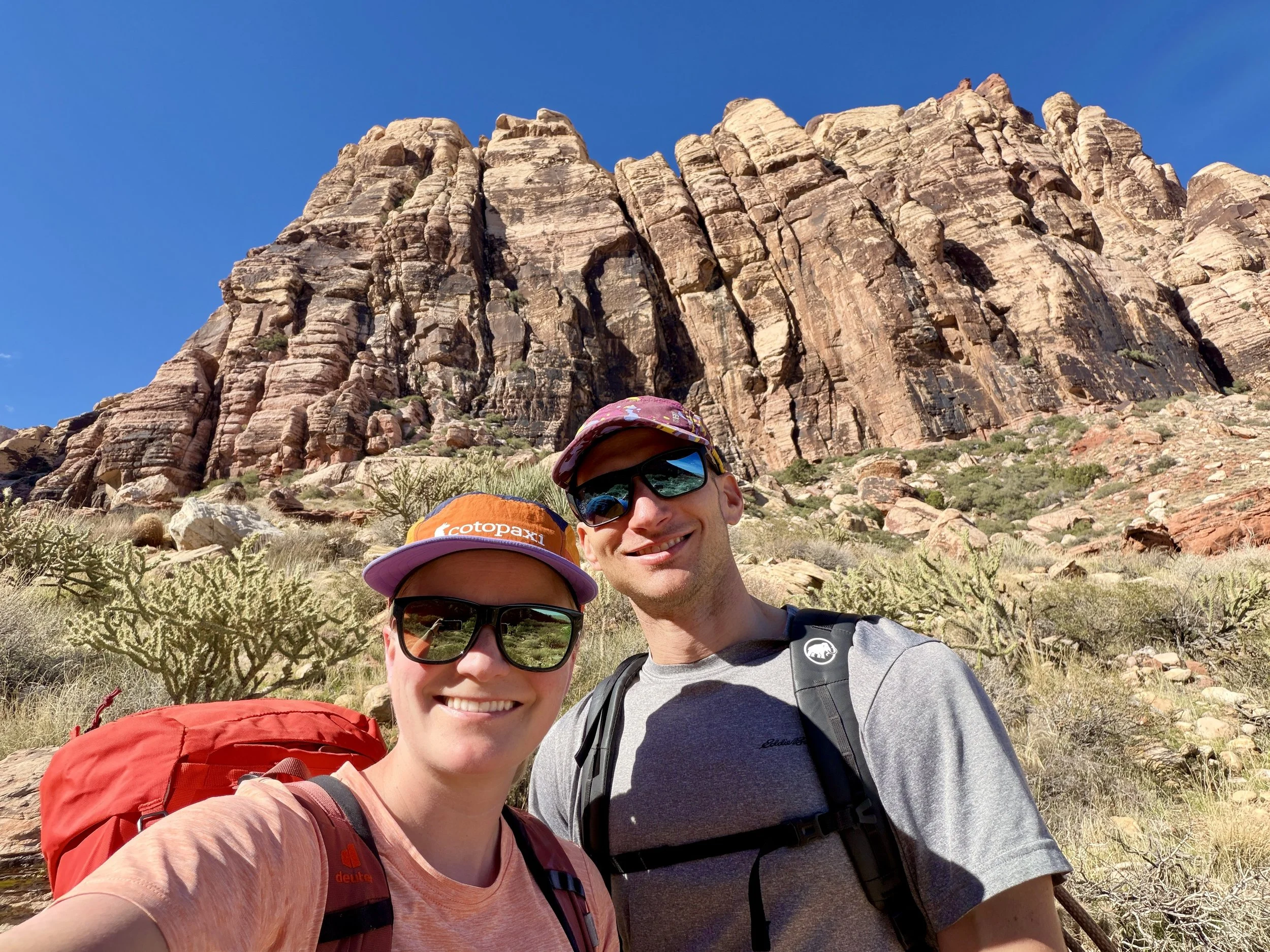
Without knowing how busy it was going to be, Mike and I decided to get an early start, and we were driving through the gate into the Red Rock Canyon National Conservation Area when it opened at 6:00am. We were parked and moving by 6:30. The approach was 1.3 miles with just under 500 ft of elevation gain and took us about 30 minutes to hike. There was one other group starting at the same time as us.
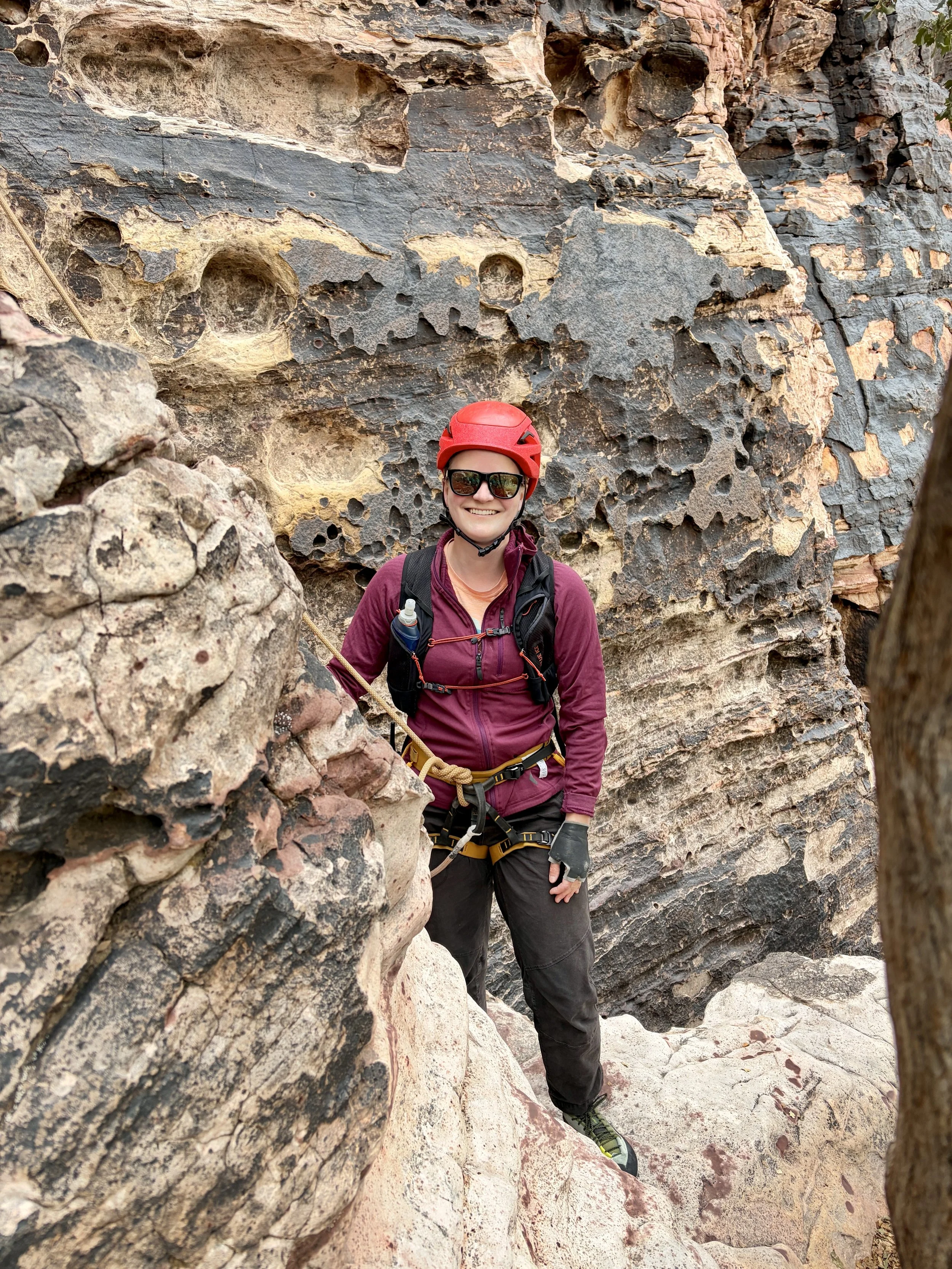
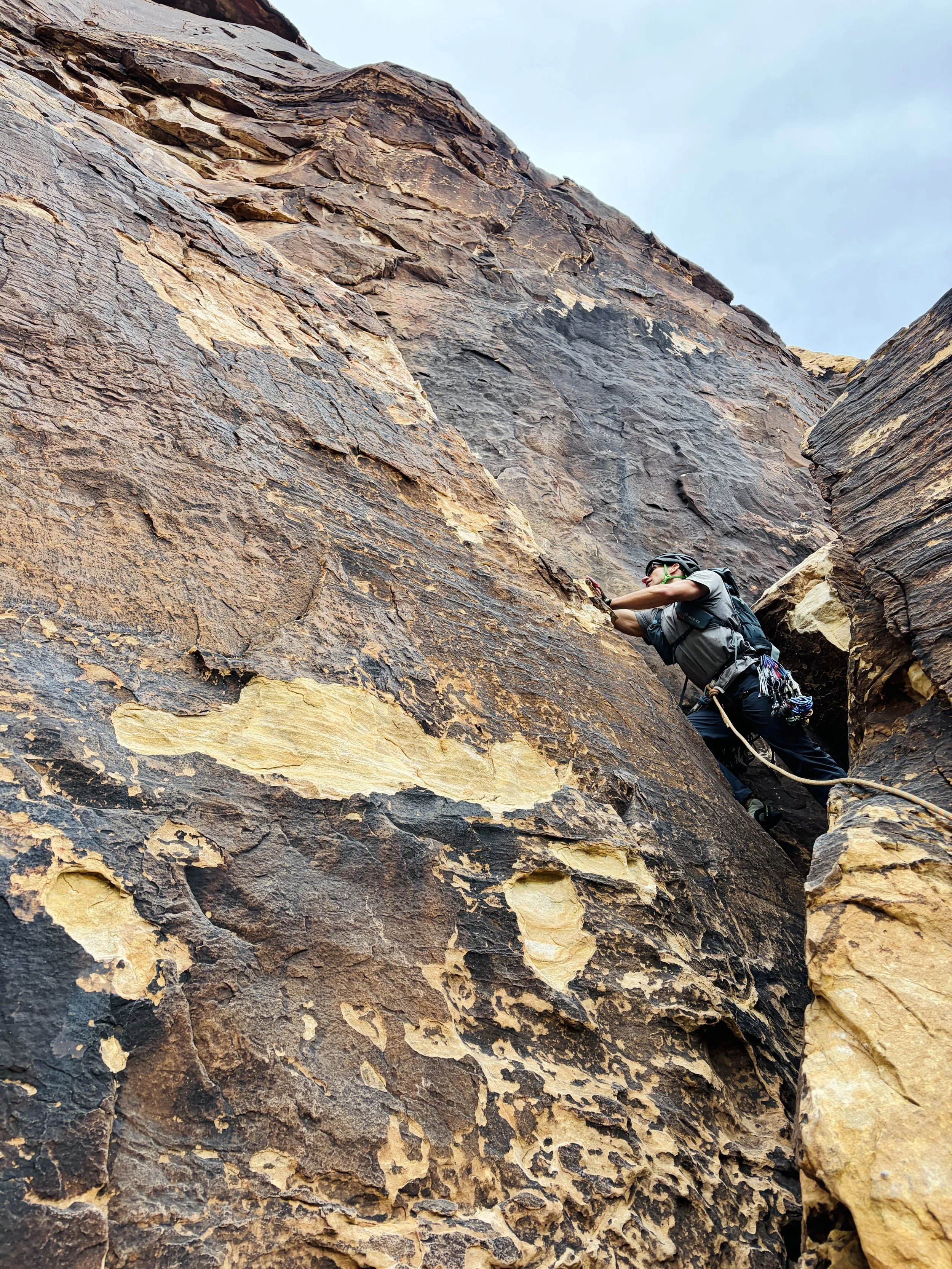
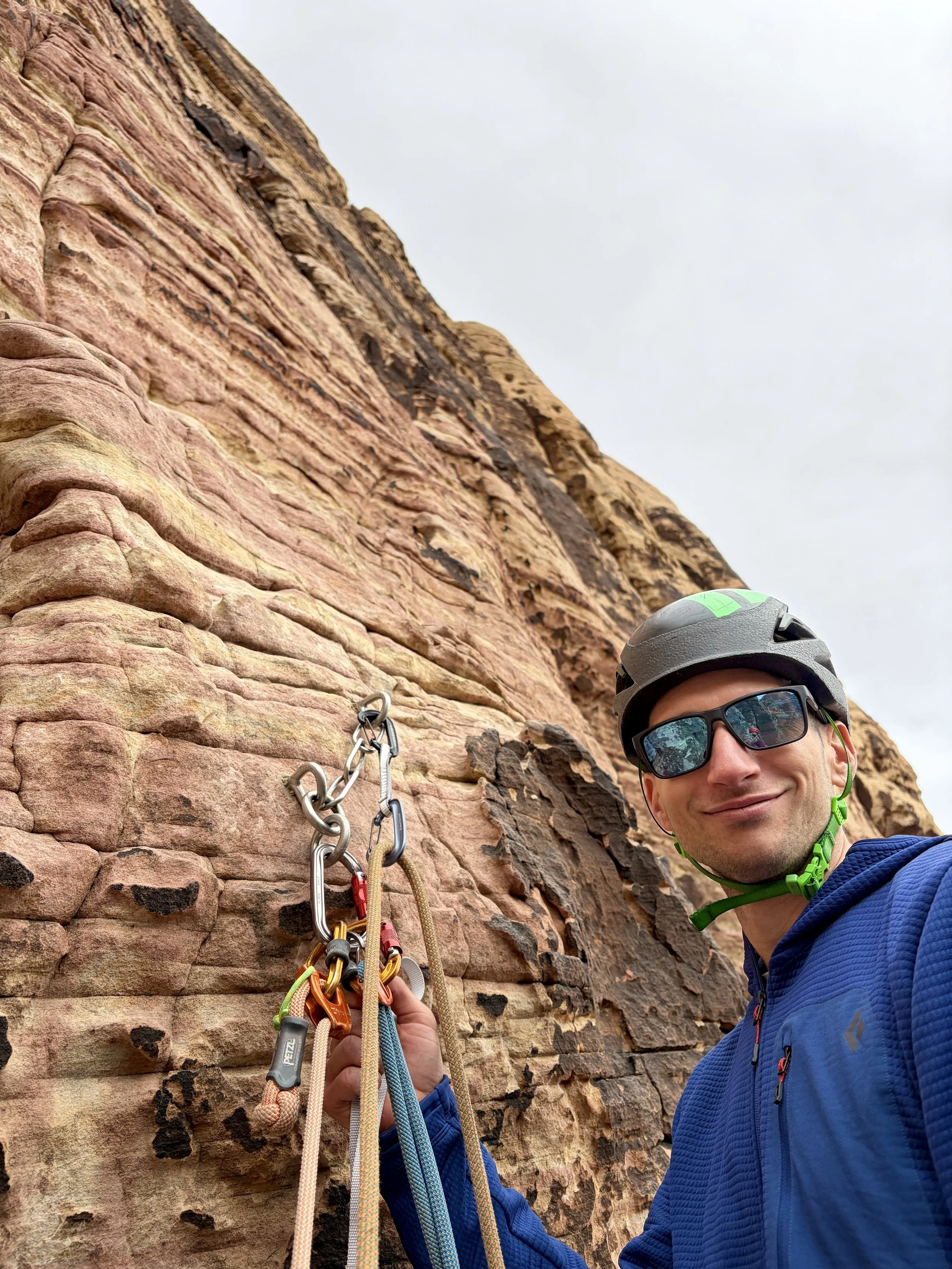
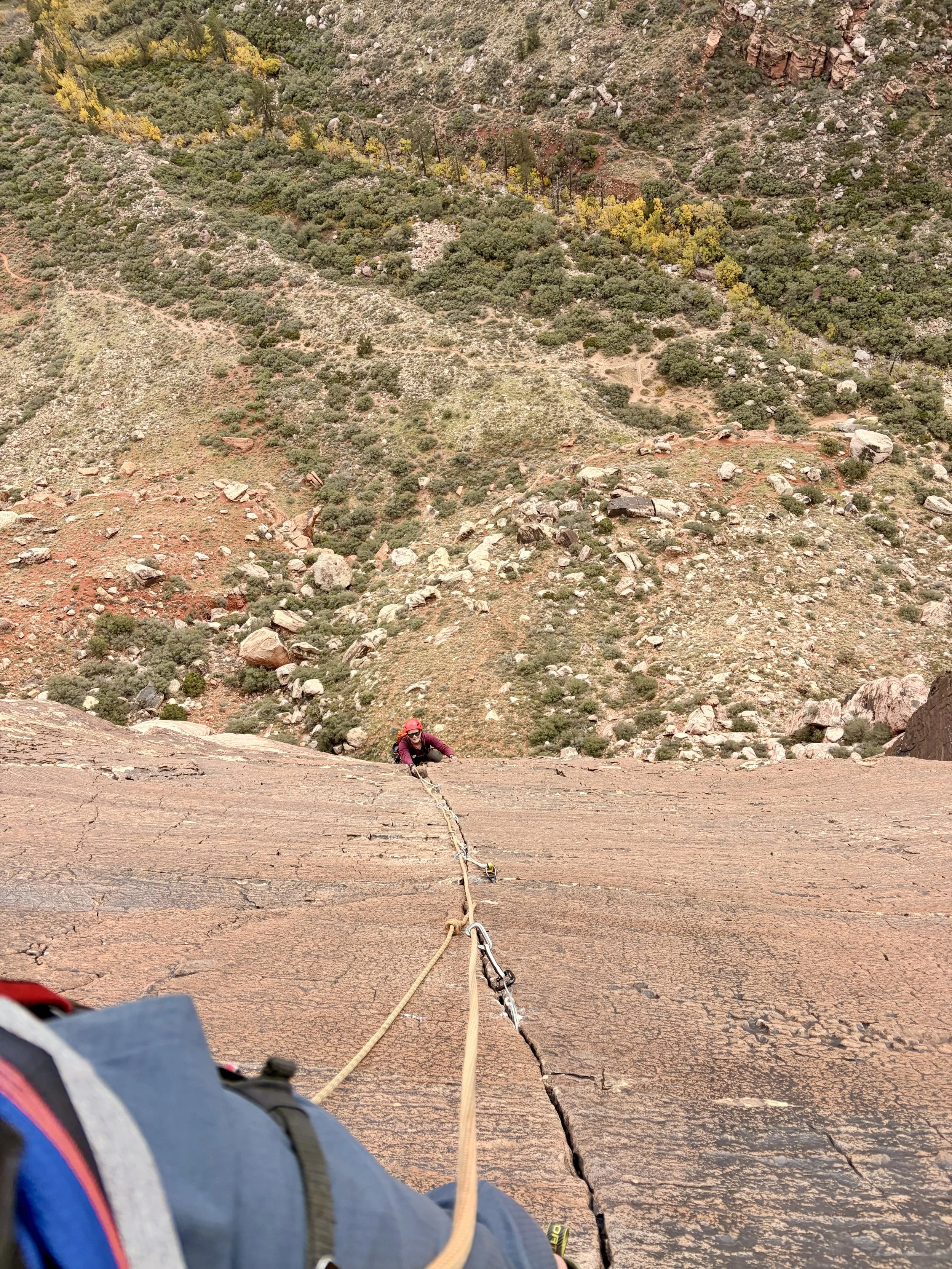
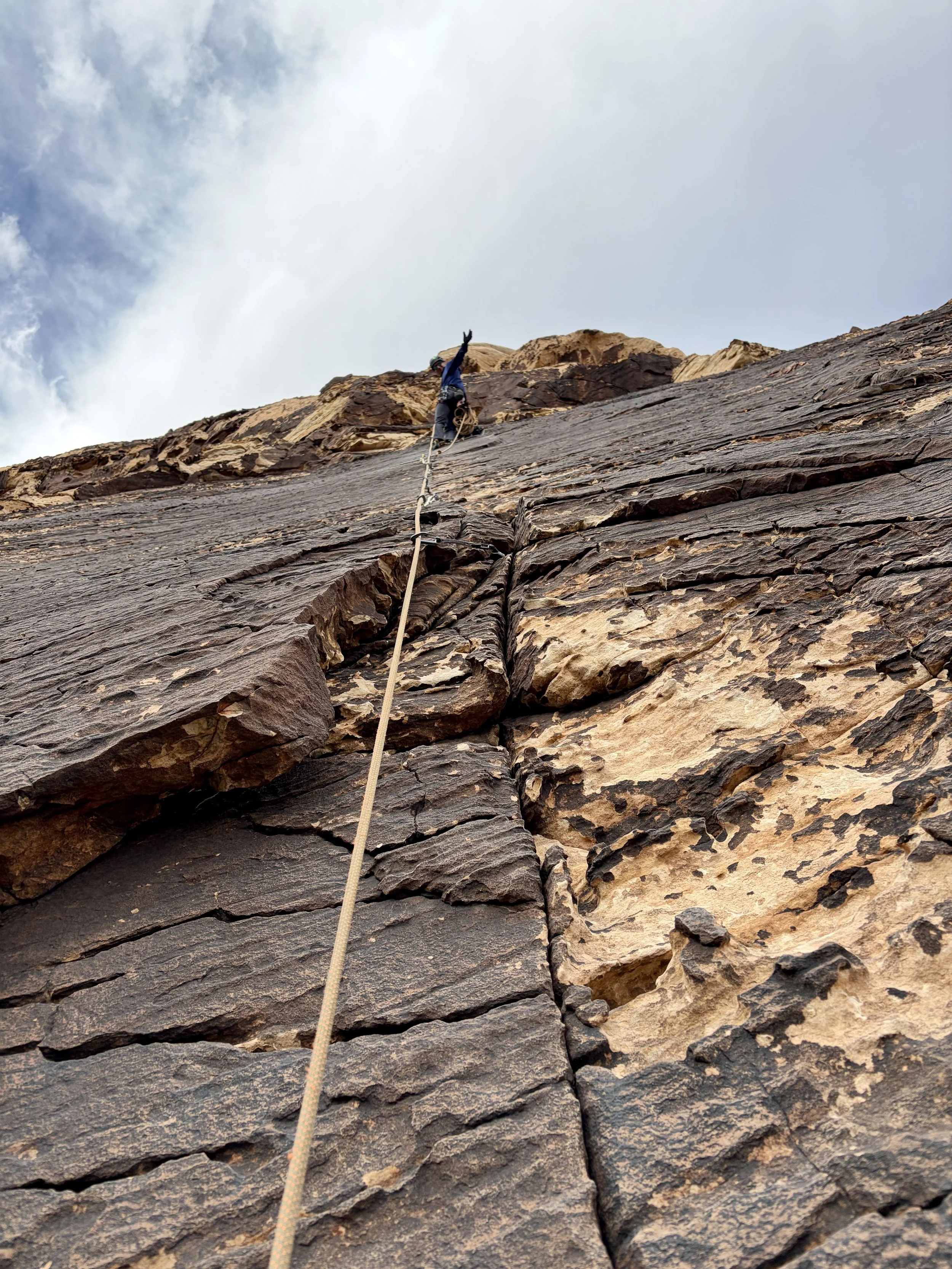
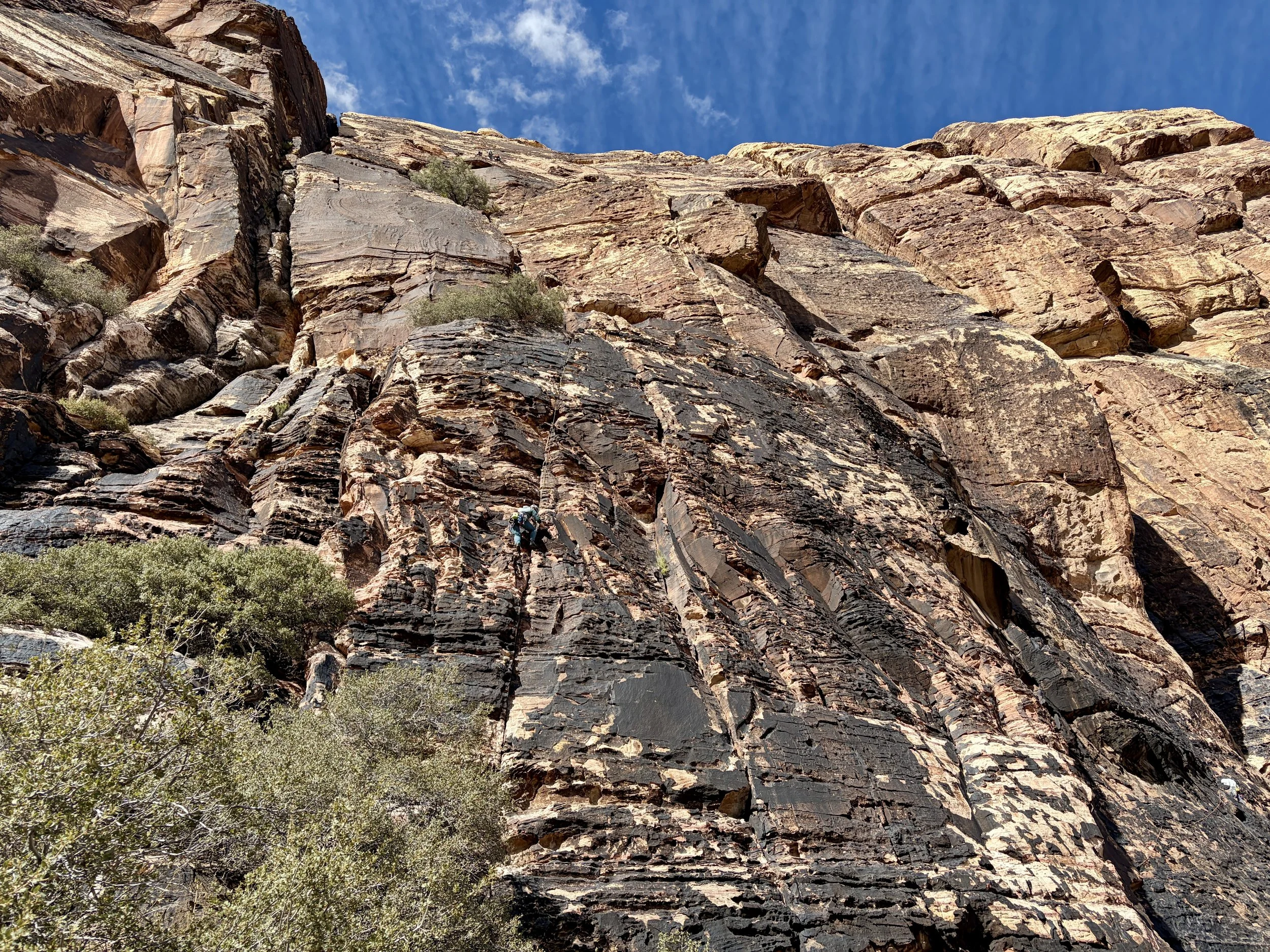
Once we got to the wall, we geared up and approached the climb with the plan of swinging leads. Mike led the first pitch, which was a really fun 5.6 pitch up an obvious crack that had an abundance of hand holds on the face. Gear options were plentiful and it’s a great pitch for a new trad leader. This pitch ended on a ledge at the top of this crack. Bolted anchor.
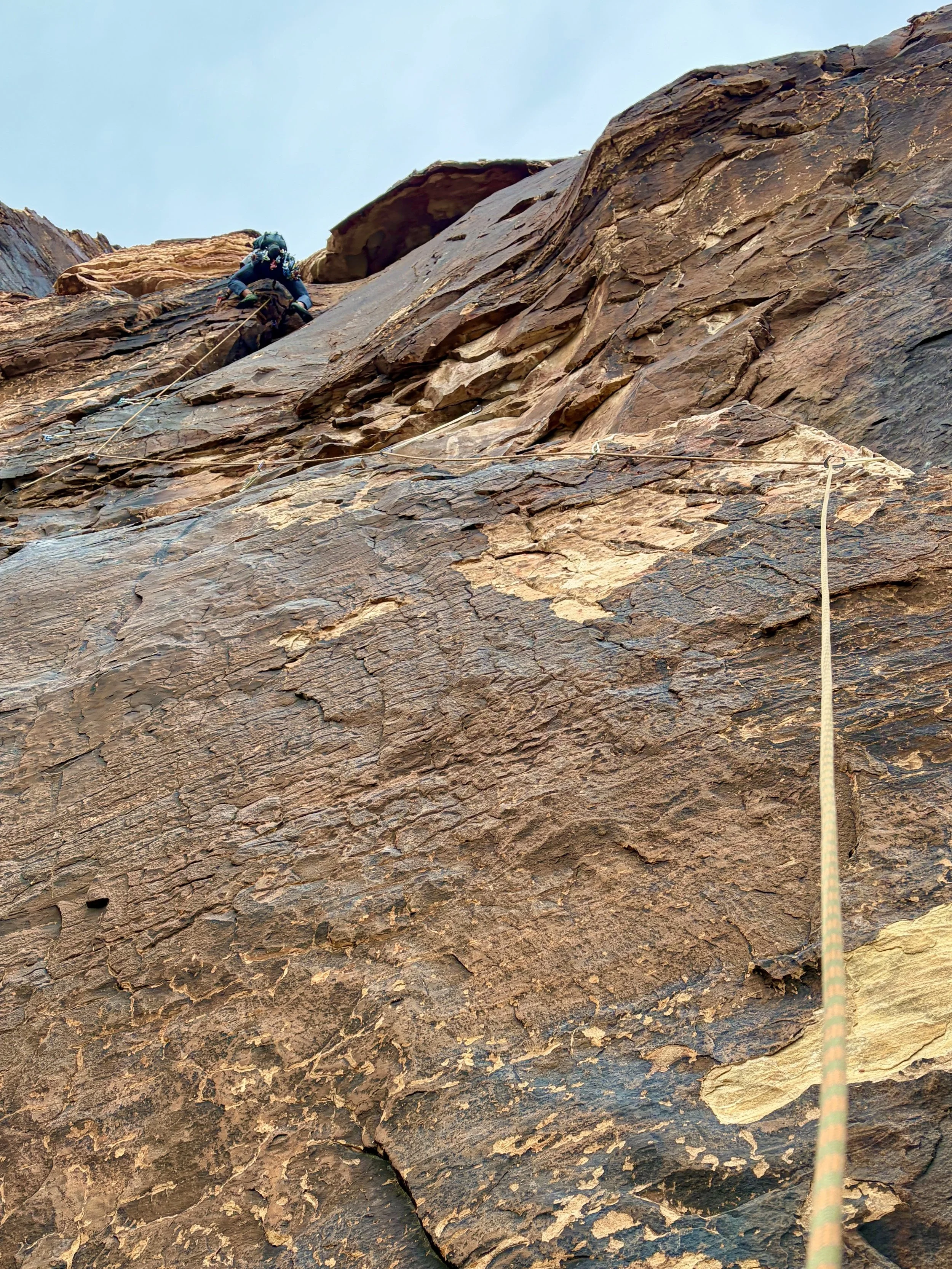
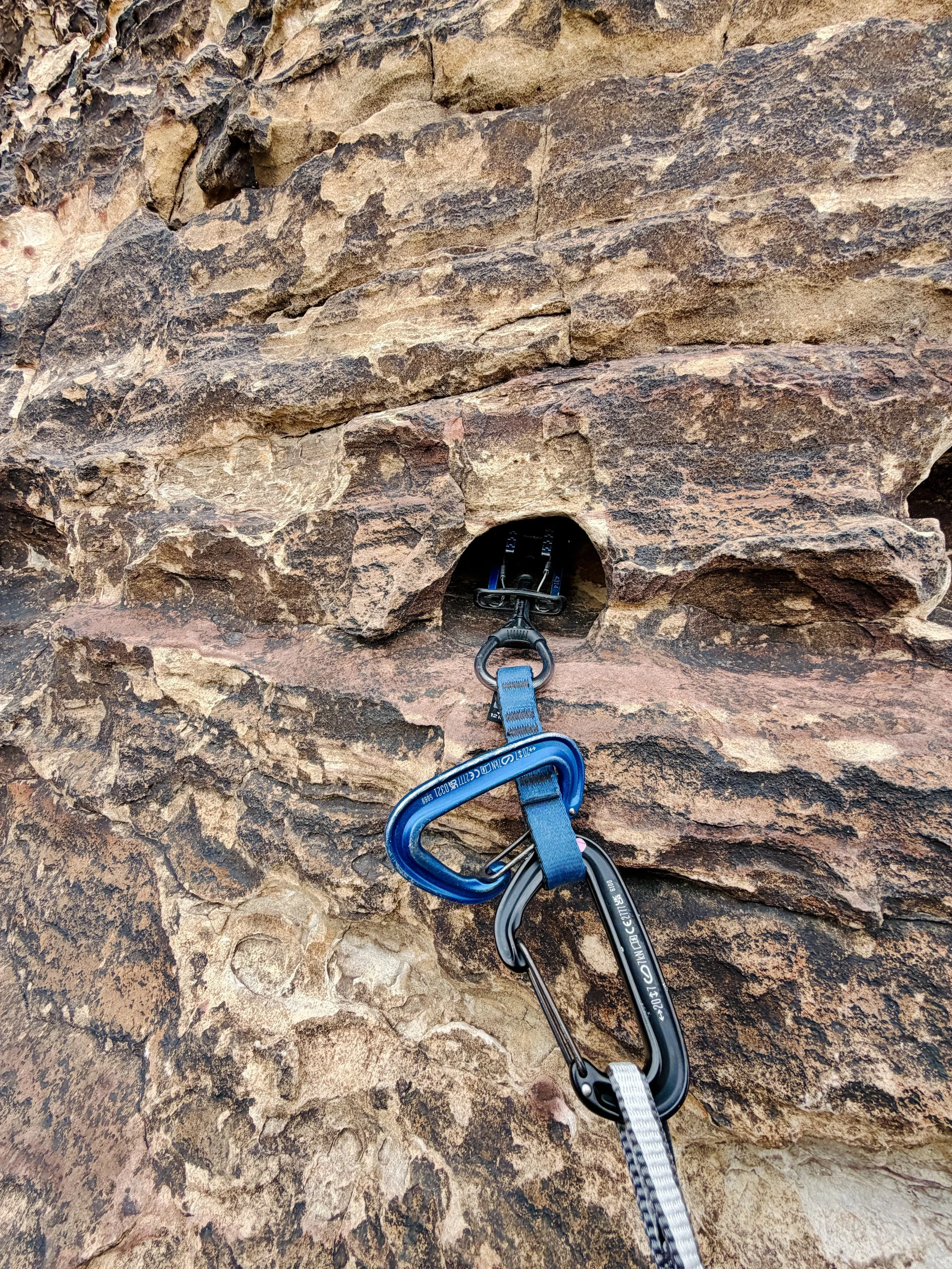
I led the second pitch, which someone described as having more three dimensional climbing, and I think that was a great way to describe it. I initially went up a face above the bolts and soon found myself in an awkward left-facing off-width crack. Thankfully it didn’t last too long, and I was out of the off-width and following a smaller crack with face climbing options up the rest of the pitch. I found the pitch to be a little harder than the 5.7 rating it has on Mountain Project, but overall found it to be a fun, engaging pitch. Bolted anchor.
Mike led the third pitch, while I found to be the toughest pitch. I would rate the pitch at 5.8 (Mountain Project rates it at a 5.7+. I’m really not a big fan of pluses - if it’s harder than 5.7, it’s a 5.8 IMO). The pitch starts out in a right trending crack for a few feet and then goes back left. Towards the top of this crack, protection options become a little more scarce and the leader will find a bolt in front of them. We could not see this bolt from the belay, but it’s there when you need it. After clipping this bolt, Mike continued to traverse left towards a right facing corner. There aren’t a ton of options for good pro before the corner, but if you look hard enough, I believe Mike found an option that worked. As you approach the corner, the angle of the wall steepens and the wall doesn’t have the same amount of handholds you found on P1 and P2 of the climb. This was the crux of the pitch for me. Once above the corner, I found myself at the bolted anchor.
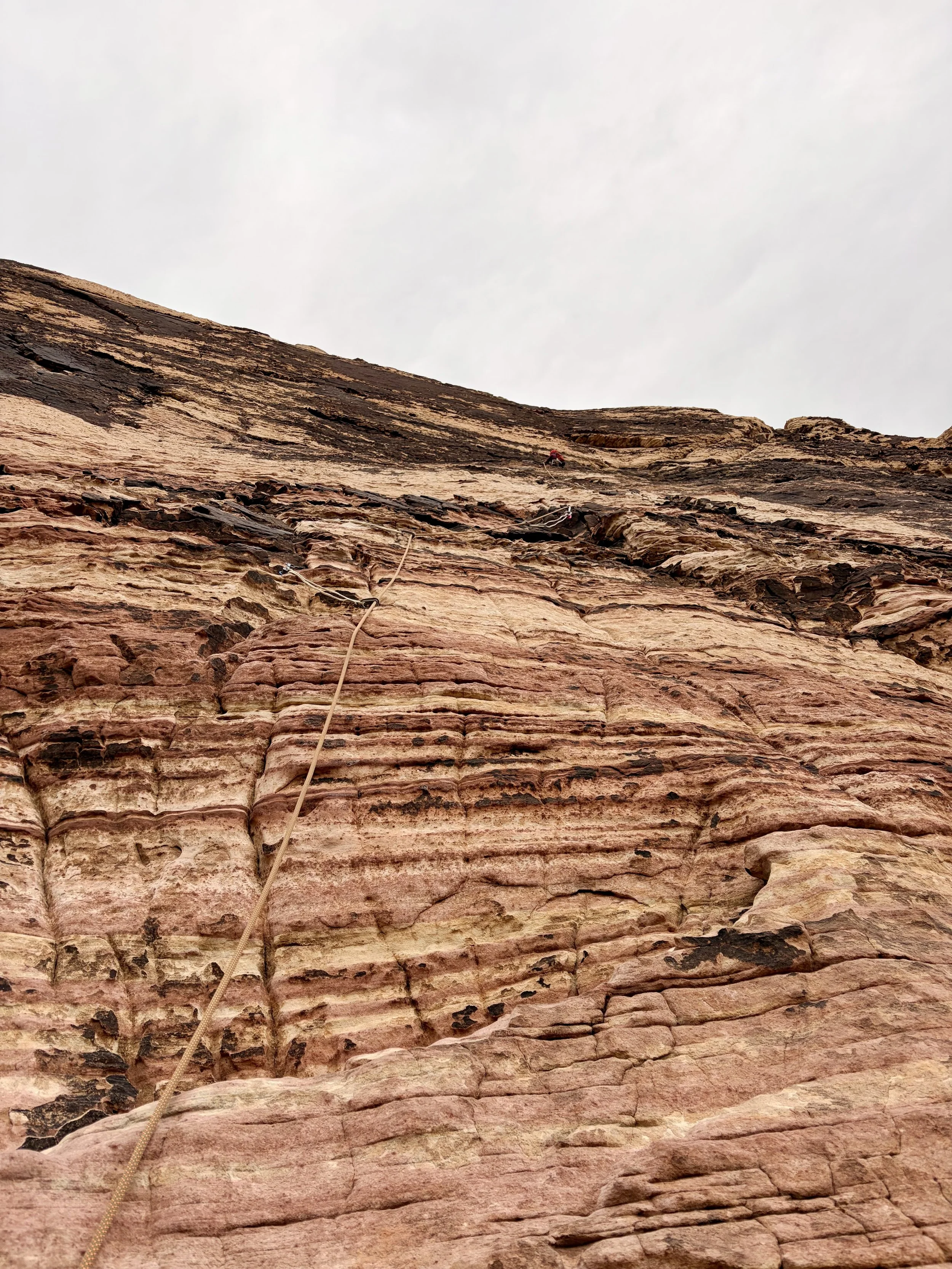
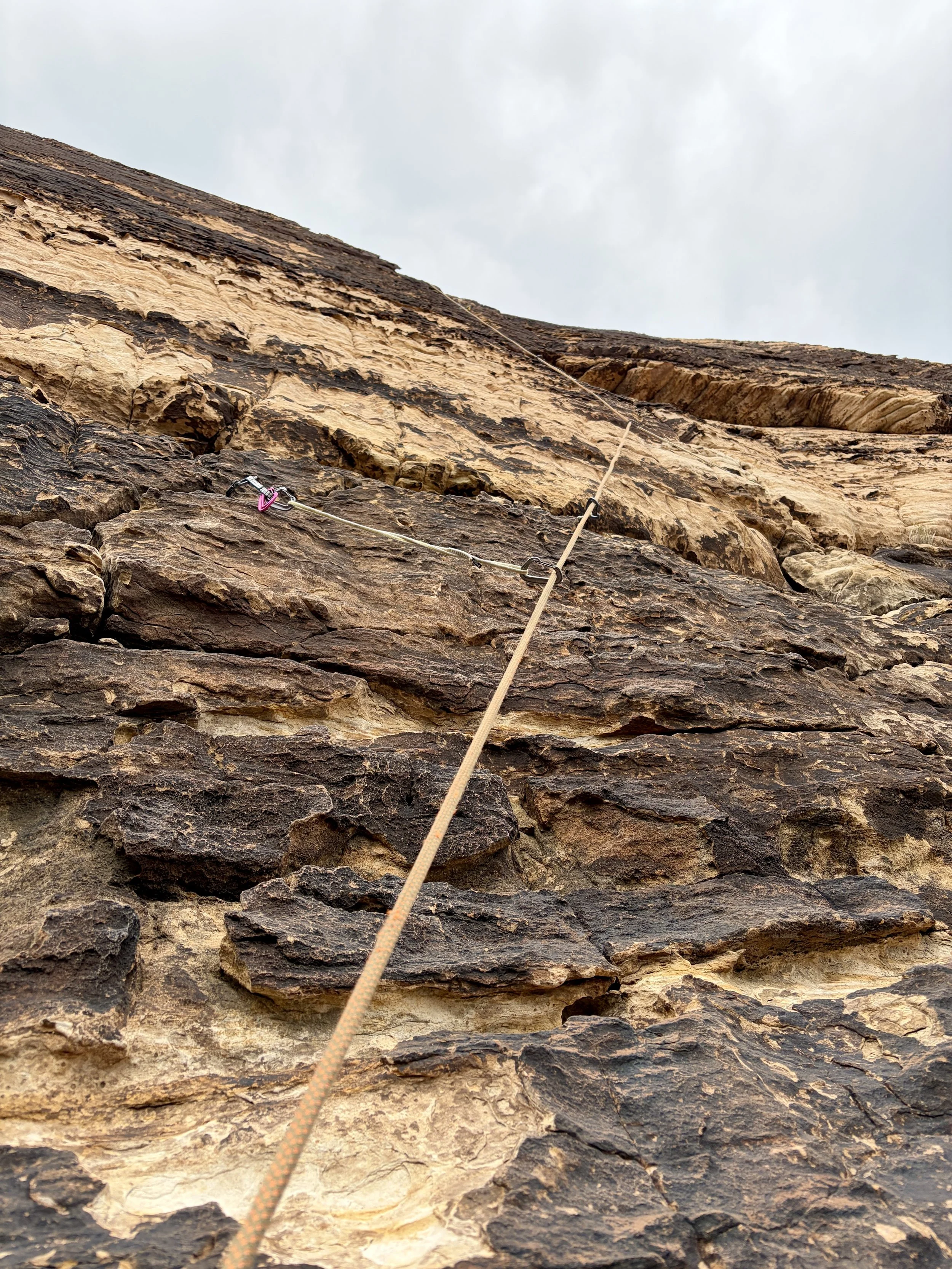
I was up to lead the fourth pitch which was the pitch that involved the most route-finding. Thankfully, at a rating of 5.6, at no point was the route finding scary, but because I couldn’t see the anchors until I was 15 ft away from them, there was more stopping and re-evaluating if I was going the right way than usual. For this pitch, I headed straight up from the anchors for ~10 ft until I found myself at a large horizontal crack. I traversed right for 5-10 ft and made my way towards a well defined crack in the black varnish. I followed this crack up for ~30 ft and found it had ample protection opportunities. As the crack petered out, I found the protection options got a little harder to find as I angled my way to the right and where I believed the anchors would be. I finally saw the anchors and made my way over to them, running it out a little bit at the top but the climbing was probably around 5.4.
Mike led the fifth and final pitch which was one of my favorite pitches of the climb. He headed up and right towards a very obvious crack. He then followed this crack up to the anchors. The crack got smaller as he approached the top and more face climbing was needed. It got a little more blank as I approached the anchors, but it never felt harder than the 5.7+ the pitch was rated at.
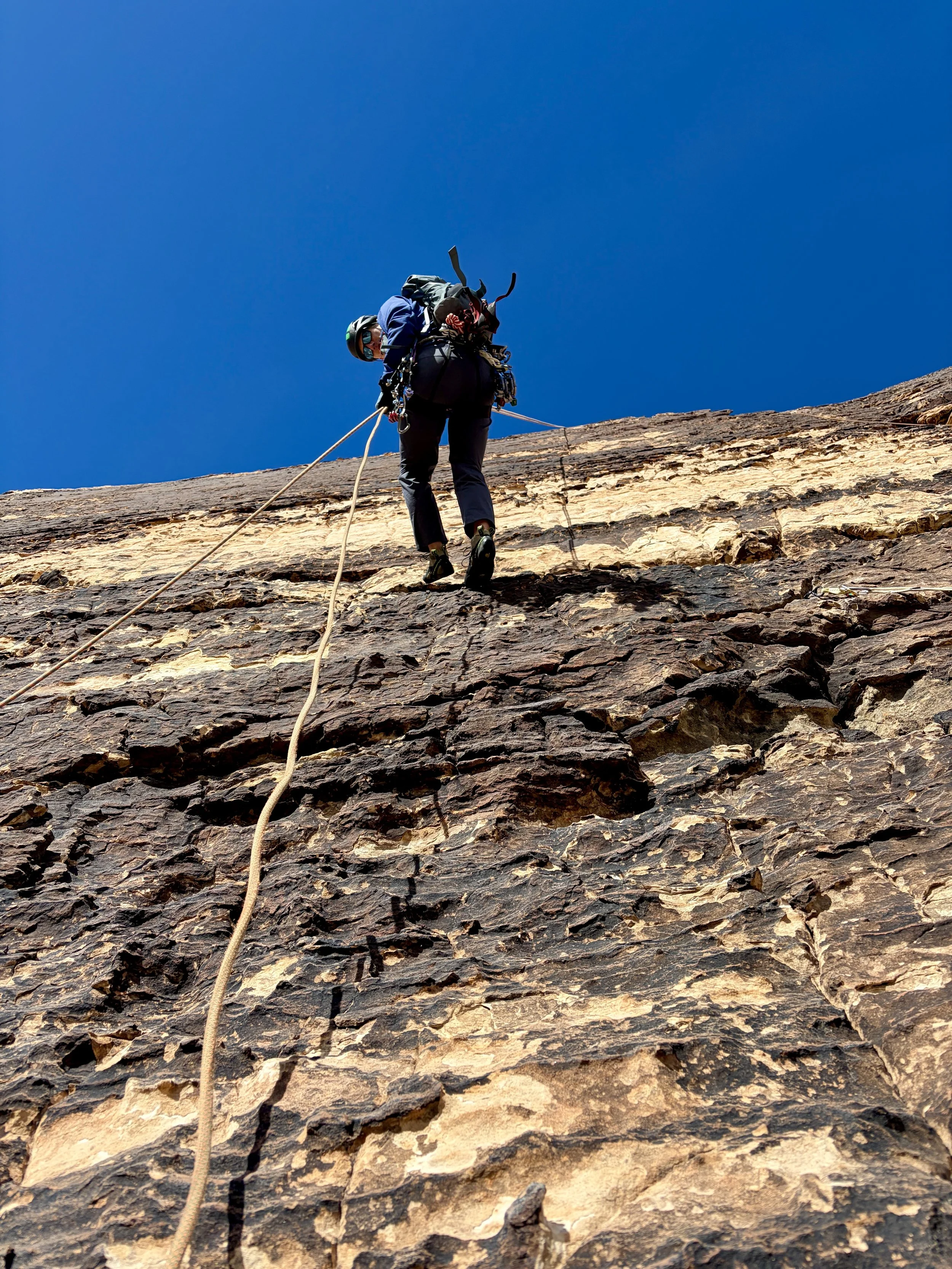
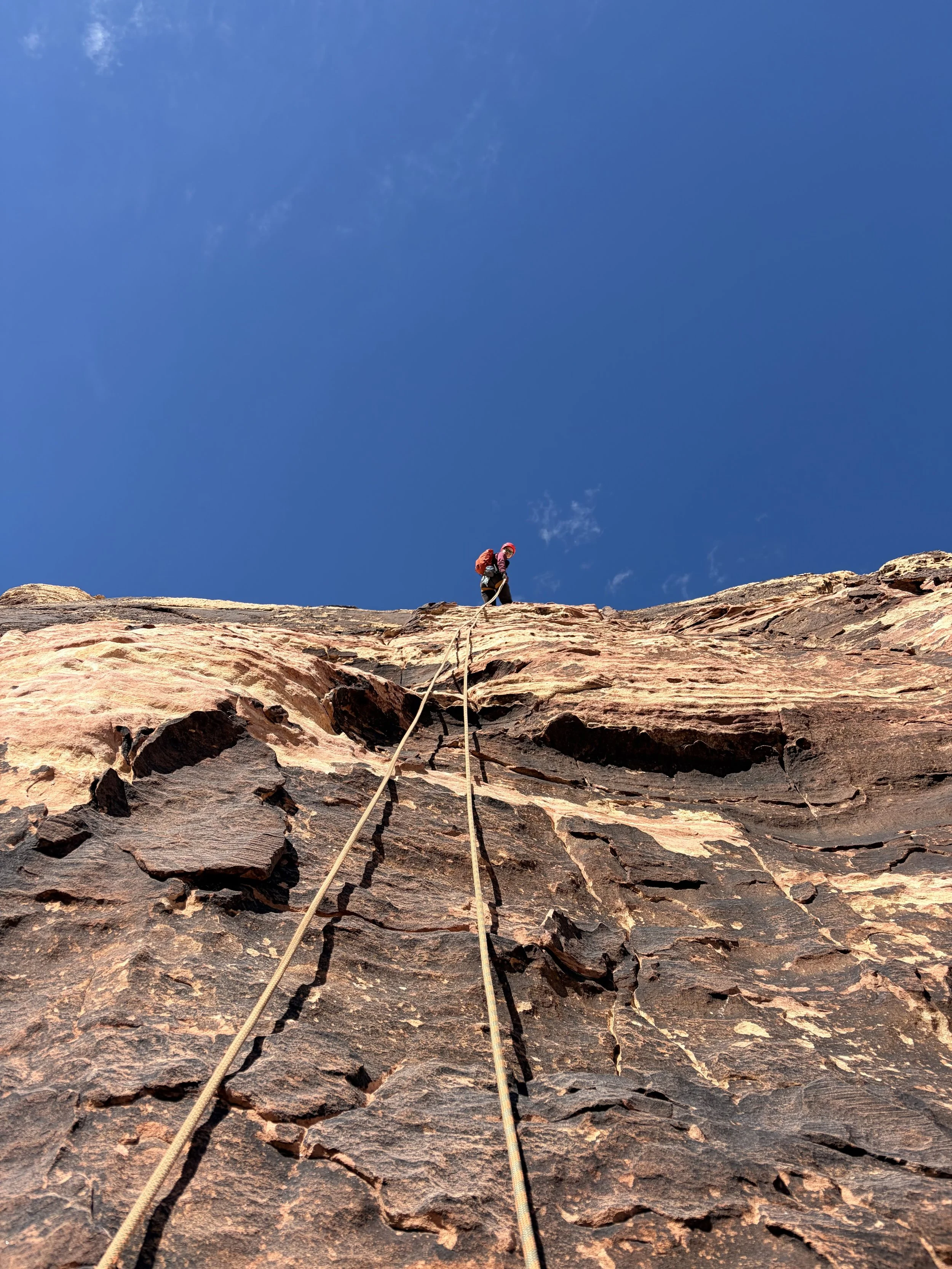
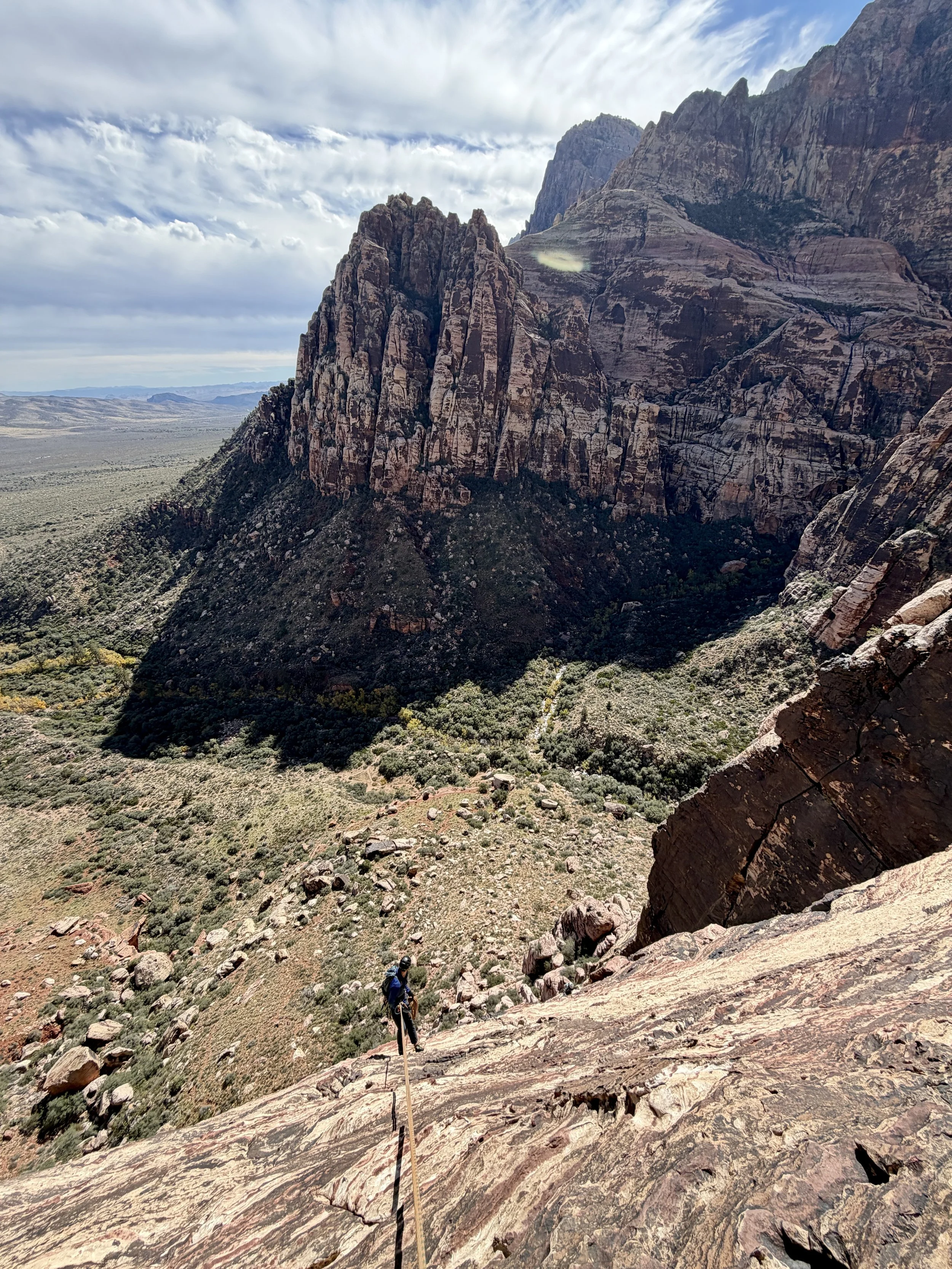
The anchors at the top of this pitch don’t have a very large belay ledge so when I got to the top, Mike left me on belay and just lowered me back down to the anchors at the top of P4. He then rappelled down to me. We then rappelled down to the next rap anchors which were ~20 ft climber’s right of the anchors on the route. We then rappelled down to the anchors we used on P2 and P1. There are definitely a few cracks your ropes can get stuck in, and while we didn’t have any issues pulling the ropes, I’d definitely be mindful of how you are pulling them!
We did this climb in early November on a day when it was cloudy in the morning, which was great because the route is east-facing. The high that day was in the low 60s with no wind and with it being overcast, we found ourselves in either just t-shirts or with a light synthetic layer on. I’d say these conditions were ideal.
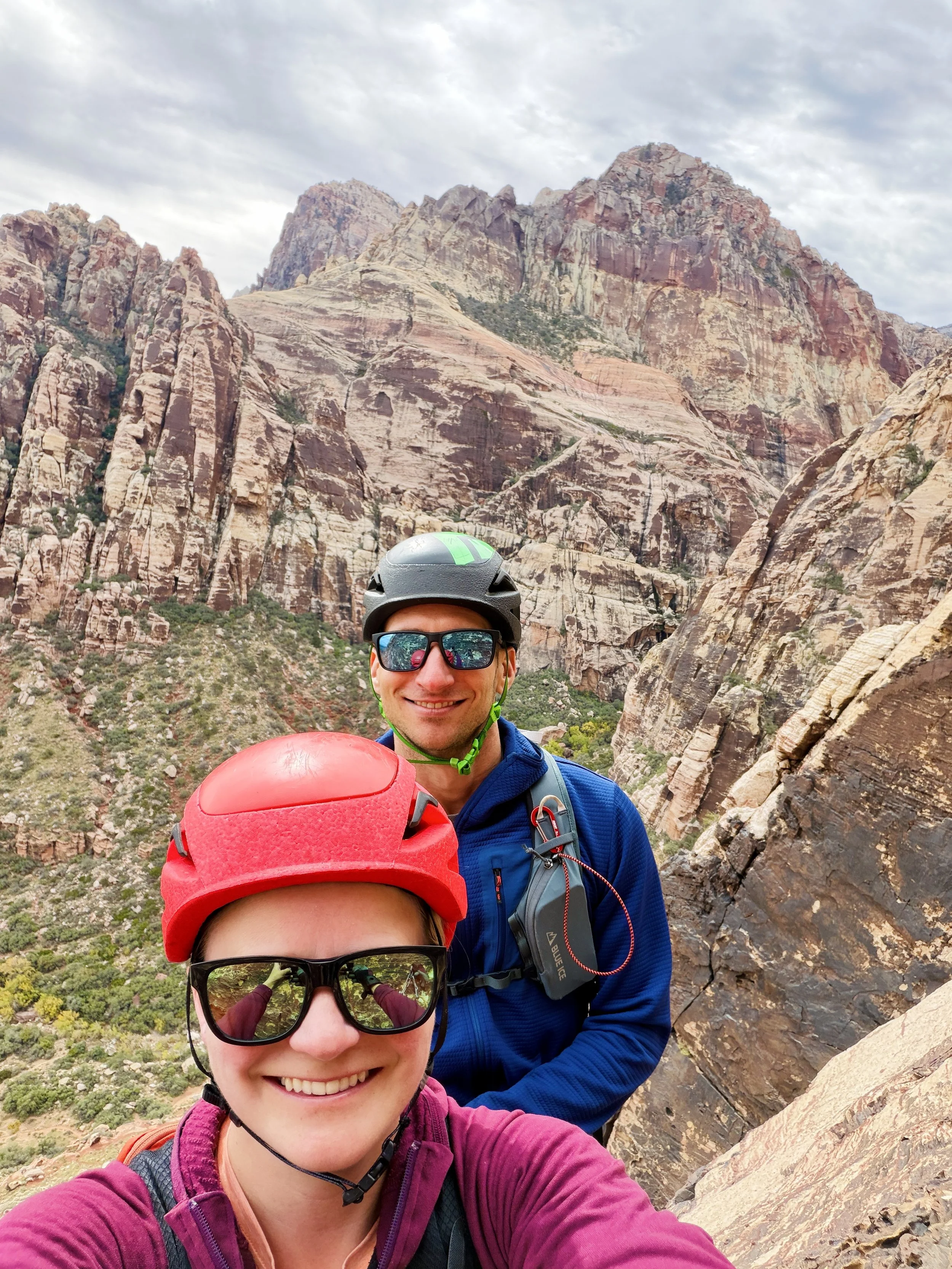
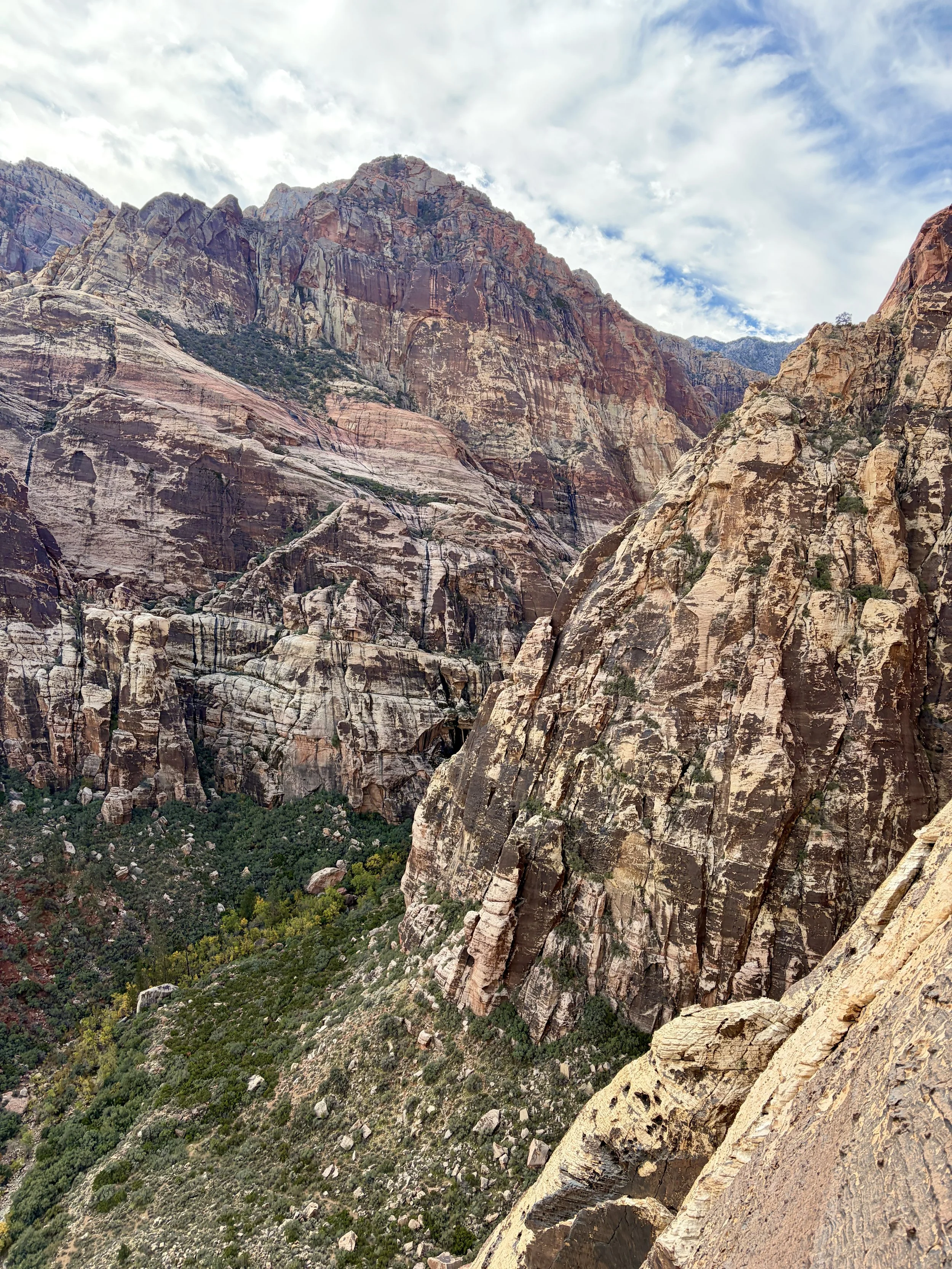
Overall, it was a fantastic day. The variety of climbing on the route was great and we found it to be really enjoyable. Finding protection when you wanted it wasn’t an issue for the most part with really just one tricky section on P3. We weren’t sure what to expect in terms of how busy the route would be, and it wasn’t an issue at all. There were 4 groups total on the route that day, with one right behind us, one three pitches behind, and one just starting as we finished.
I’d rate the climb as a 5.8. It’s a route worth checking out if you’re in the area!
Total stats: 3.17 miles, 800 ft of elevation gain, 5 pitches, 5 rappels